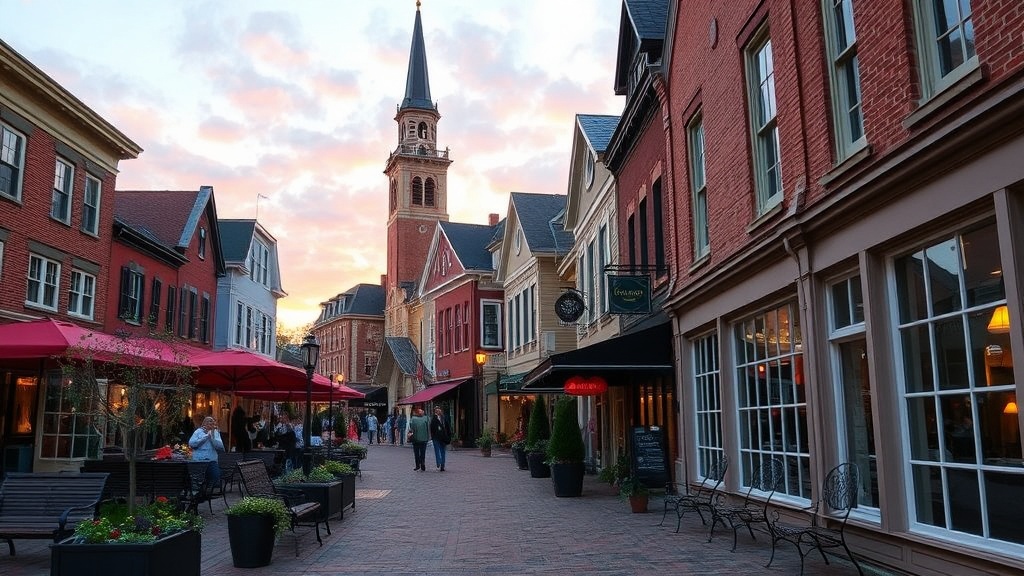
Exploring Old Town Niagara-on-the-Lake: A Local's Guide to Hidden Gems

What Makes Old Town Niagara-on-the-Lake Different from the Tourist Trail?
Old Town Niagara-on-the-Lake isn't just the storefronts along Queen Street. The real character lives in the side streets, the century-old homes on Prideaux, the workshops behind closed doors, and the shortcuts locals use to avoid the weekend crowds. This guide maps out the spots that don't appear in visitor brochures—the hardware store that's been here since 1850, the alley where you can still see original gas lamp fixtures, and the tiny parks where residents actually sit and read.
You won't find itinerary templates here. Instead, you'll get a ground-level view of how people who live in Niagara-on-the-Lake use their own downtown. Whether you're new to the area or you've walked these streets for years, there's something here you haven't noticed.
Where Can You Find Historical Architecture Beyond the Main Strip?
The best-preserved buildings in Niagara-on-the-Lake aren't on Queen Street—they're on Melville Street and the residential blocks between King and Prideaux. The Simpson House at 116 Melville dates back to 1830 and still has its original hand-hewn timber framing visible from the sidewalk. You can't go inside (it's a private residence), but the exterior alone tells you everything about how this town was built—local stone, local timber, and no shortage of craft.
The Niagara-on-the-Lake Museum maintains walking tour maps that point out the Georgian and Victorian details you might otherwise miss—the fanlights above doorways, the iron hitching posts that still stand at several corners, and the variation in brickwork between pre-1812 and post-War of 1812 construction. Worth noting: the museum itself sits in a former courthouse from 1847, so the building you're standing in is part of the story.
Walk down Centre Street toward the river. The homes here were built for shipyard workers and dockhands in the 1850s and 60s—much smaller than the merchant homes on Prideaux, but built with the same attention to detail. Many still have the original carriage stones at the edge of the property line, worn smooth by two centuries of wheels.
Which Local Shops Actually Serve Residents?
Tourists browse. Locals buy. Here's the thing—the shops that keep Niagara-on-the-Lake functioning aren't always the ones with the decorated windows. The Niagara-on-the-Lake Hardware on Queen Street (at the corner of Mississauga) has been operating continuously since 1850. You can still buy a single nail by weight, get a key cut while you wait, or find out why your century-old window sash won't stay open. The staff knows which contractors work on heritage homes and which ones to avoid.
The Scottish Loft on Queen attracts visitors, sure—but locals shop the back section where they keep the practical woolens, the heavy-duty socks, and the rain gear that actually holds up during a November storm down by the lake. The catch? They don't advertise this section. You have to walk past the tartan displays to find it.
For groceries, Avondale Stores at 156 Mary Street serves the Old Town neighborhood with a selection that reflects what people actually cook—fresh meat counter, local produce when it's in season, and a freezer section that hasn't been redesigned since the 1990s. It's not pretty, but you can walk there from anywhere in Old Town, and they know your name by the third visit.
| Shop | What Locals Buy | Tourists Usually Miss |
|---|---|---|
| Niagara-on-the-Lake Hardware | Window hardware, key cutting, contractor referrals | The basement with vintage plumbing parts |
| The Scottish Loft | Practical woolens, outdoor gear | The back section with workwear |
| Avondale Stores | Daily groceries, meat counter staples | The local bulletin board with real community notices |
| GoodEarth Coffeehouse | Take-out during morning rush | The upstairs seating area with actual quiet |
Where Do Residents Go When They Need Quiet?
The waterfront trail gets crowded. Simcoe Park hosts events. But Niagara-on-the-Lake has smaller patches of green that locals treat as extensions of their own backyards. Ryerson Park—just off Prideaux Street near the corner of Ricardo—has benches positioned under mature oak trees and a view of the lake that's partially obscured by foliage. That obscurity is the point. You can read here without feeling like you're on display.
The Memorial Park on King Street (behind the court house) has no playground equipment—just grass, a few benches, and a war memorial that's worth pausing at. Residents use it for dog walking before 9 AM and for eating lunch on weekdays. On summer afternoons, you'll find municipal workers here on their breaks, which tells you everything about whether a spot is actually peaceful.
For walking—not jogging, not power-walking, just walking—the residential streets between Charlotte and Ricardo offer something rare in a tourist town: streets where you won't encounter a parked tour bus. The homes here are lived-in. Gardens spill onto boulevards. You'll see the same people at the same times—evidence that this is how the neighborhood actually functions.
What Services Keep the Community Running?
Every functional town needs infrastructure that residents can rely on. In Niagara-on-the-Lake, the Niagara-on-the-Lake Public Library on Anderson Lane does more than lend books—it's where you find out what's actually happening. The bulletin board near the entrance lists services, small contractors, and community events that never make it to official tourism sites. The library also provides the only free public computers in the Old Town area, plus printing at cost.
The NOTL Post Office on Queen Street handles everything from passport applications to parcel pickup, and the staff knows the delivery quirks of every address in town—who has a locked gate, which driveways flood in spring, where to leave packages when no one's home. That said, arrive before 11 AM on Saturdays or you'll be in line behind everyone picking up their weekend mail.
For medical needs, the Niagara-on-the-Lake Medical Centre on Wellington Street serves residents who don't want to drive to St. Catharines for every appointment. They're not taking new patients (as of early 2025), but the walk-in clinic operates weekdays and the pharmacy next door stocks most prescriptions without the wait times you'd face in larger centers.
How Can You Tell When a Spot Is Actually Local?
The signs aren't always obvious. Here's what to look for in Niagara-on-the-Lake: opening hours that don't cater to weekend visitors (closed Sundays, open early weekdays), payment methods that include local charge accounts, and—most tellingly—customers who greet each other by name. The NOTL Hydro office on Mary Street isn't a destination, but watching the interactions there tells you how this community functions. People discuss drainage issues, transformer upgrades, and which streets lost power in the last storm.
The Town of Niagara-on-the-Late website lists municipal services, but the real information flows through the Niagara-on-the-Lake Chamber of Commerce newsletter and the physical bulletin boards at Avondale, the library, and the post office. These are where you'll find notices about road closures, community meetings, and services for seniors—practical information for people who live here, not headlines for visitors.
Walk through Old Town on a Tuesday morning. Watch who carries coffee cups from home versus who stops at cafes. Notice which storefronts have local newspapers delivered. Pay attention to the conversations you overhear—are they discussing dinner reservations or drainage? The distinction matters. Niagara-on-the-Lake functions as a working town first. The visitors are welcome, but the infrastructure exists for the people who stay.
That's the real Old Town. Not a preserved museum piece, but a neighborhood that happens to be beautiful. The historic homes need maintenance. The gardens need tending. The sidewalks heave in winter and need repair in spring. When you see those activities—the painting, the pruning, the patching—you're seeing the town as it actually is. A place where people live, work, and occasionally stop to appreciate that they get to do both in one of the most photographed corners of Ontario.