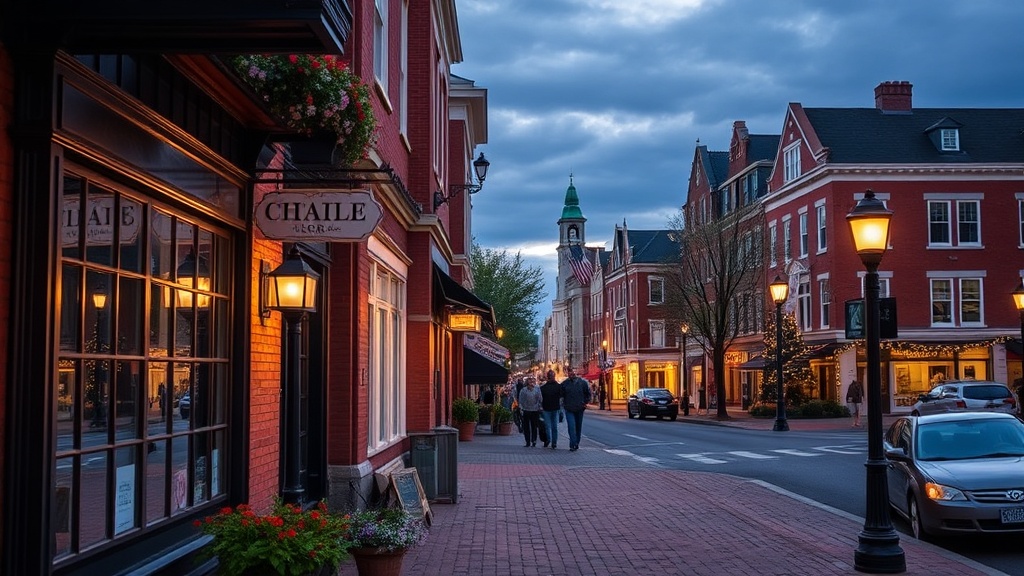
Exploring the Character and Charm of Old Town Niagara-on-the-Lake

Old Town Niagara-on-the-Lake holds the heart of our community — a place where heritage architecture meets daily errands, where neighbours catch up on Queen Street, and where the rhythm of local life plays out against a backdrop of preserved 19th-century character. This post explores what makes this district genuinely worth knowing for residents who live, work, and shop here year-round.
What Makes Old Town Niagara-on-the-Lake Different from the Rest of the Region?
Old Town isn't a tourist construct — it's a functioning commercial and residential district that predates Confederation. The compact grid of streets (mostly between King Street and the riverfront, bounded by Mary Street to the west and Byron Street to the east) contains one of Ontario's most intact collections of Loyalist and Victorian architecture. For locals, this means living alongside history without living in a museum.
The Niagara-on-the-Lake Museum on Castlereagh Street anchors the district's preservation efforts. Their archives — open to residents for research — document how the town rebuilt after the War of 1812 fire that destroyed most buildings. When you walk past the Court House Theatre or the Apothecary Museum, you're seeing structures that have served continuous community functions for over 150 years.
Here's the thing: other heritage districts in Ontario often hollow out — businesses flee to strip malls, leaving pretty but empty shells. Old Town Niagara-on-the-Lake has managed (imperfectly, but consistently) to keep actual services operational. You'll find a hardware store, a pharmacy, legal offices, and the post office mixed among galleries and specialty shops. That mix matters when you need to pick up a prescription and grab a coffee without driving to St. Catharines.
Where Do Niagara-on-the-Lake Residents Actually Shop and Gather?
Queen Street functions as the community's living room. Locals know that weekday mornings around 9 AM bring a predictable crowd to the corner of Queen and Picton — neighbours stopping after school drop-off, contractors grabbing supplies, retirees comparing notes on municipal issues.
The Niagara-on-the-Lake Public Library on Anderson Lane serves as an underappreciated anchor. Beyond lending services, they host municipal information sessions, local history talks, and winter programming that gives residents something to do when the seasonal crowds thin out. Their local history collection includes maps showing how property boundaries in Old Town have shifted — useful if you own one of the heritage homes and need to understand your lot's original dimensions.
Specific spots worth knowing:
- Simcoe Park — The green space between King and Prideaux streets hosts the summer farmers' market (Saturday mornings), but locals use it year-round for the playground, shade trees, and the small pond that ices over reliably enough for supervised skating when winter cooperates.
- The Royal Bank corner — Technically just the intersection of Queen and Mississauga, but this is where informal community news spreads. You'll find flyers for lost pets, garage sales, and the occasional passionate discussion about parking regulations.
- Marine Dr. — The street running along the riverfront isn't just scenic; it's practical. The municipal dock here serves boaters who live in town, and the walking path connects to the Niagara Parkway trail system for cyclists commuting to Virgil or St. Davids.
Worth noting: many residents bypass Queen Street entirely for practical shopping, heading instead to the plaza at Mary and Wellington or the Virgil commercial strip. Old Town serves daily needs, but it doesn't serve all needs — and that's fine. The district knows its role.
How Has Old Town Niagara-on-the-Lake Changed for Year-Round Residents?
The shift has been gradual but real. Twenty years ago, Old Town effectively shut down from November through April. Today, enough residents live in the core (full-time, not just summer) that businesses have adapted. The grocery store on Gage Street expanded its hours. The pharmacy added delivery services for seniors in the heritage homes that lack elevators.
That said, seasonal pressures remain. Parking along Queen Street flips from manageable to frustrating between May and October. The municipality has experimented with resident parking permits for side streets — with mixed results. If you're considering a move to Old Town, visit on a Saturday in July before you commit. The charm doesn't disappear, but the convenience does.
Housing in Old Town presents genuine challenges. The heritage designation that preserves architectural character also limits renovations and new construction. The result? A tight supply of homes, many of them historic properties requiring expensive maintenance. Young families often start in Old Town, discover the school catchment and walkability suit them, then find themselves priced out of upsizing within the same neighbourhood.
| Street/Area | Character | Best For | Parking Situation |
|---|---|---|---|
| Queen Street (main strip) | Commercial core, historic storefronts | Daily errands, neighbour encounters | Difficult May-Oct, manageable off-season |
| King Street residential blocks | Tree-lined, mostly pre-1900 homes | Quiet living within walking distance of services | Street parking, permit required in sections |
| Riverfront (Marine Dr.) | Open views, exposure to lake winds | Walking, cycling, boating access | Limited, time-restricted |
| Castlereagh/Anderson area | Institutional mix — library, museum, church | Community events, research, services | Small lots, mostly short-term |
The Catch? Living with Heritage Rules
Owning property in Old Town means dealing with the Niagara-on-the-Lake Heritage Committee. Paint colours, window replacements, and even landscaping changes can require approval. For some residents, this protects property values and neighbourhood character. For others, it's maddening bureaucracy. The committee meets monthly at the Court House, and their agendas are public record — worth reviewing if you're considering a purchase.
The Town of Niagara-on-the-Lake website maintains current heritage designation maps. These matter because insurance companies sometimes charge different rates for heritage-designated properties, and mortgage lenders may have specific requirements. Do your homework before buying.
What Community Life Actually Looks Like in Old Town
Seasonal rhythms define the social calendar. Winter brings the Shaw Festival off-season — technically a theatre company based on Queen Street, but locals experience it as the quiet months when restaurant reservations become possible again. Spring means the lilac collection at the Niagara Parks Botanical Gardens (just outside Old Town, but closely connected) and the start of the Saturday farmers' market in Simcoe Park. Summer is survival mode — crowded, profitable for businesses, exhausting for residents. Fall brings wine harvest season, which matters because many Old Town residents work in or adjacent to the wine industry.
Volunteer opportunities concentrate in heritage preservation and environmental stewardship. The Niagara-on-the-Lake Chamber of Commerce coordinates some community clean-up events, though their focus tilts toward visitor services. More grassroots options include the Friends of Fort George (active in advocacy, not just historical reenactment) and various neighbourhood associations that handle everything from traffic calming requests to heritage building maintenance funds.
Religious institutions remain social anchors. The St. Mark's Anglican Church on Byron Street and the St. Vincent de Paul Catholic Church on Picton Street both host community events beyond regular services — food drives, blood donor clinics, meetings for seniors' groups. You don't need to attend services to participate in these programs.
The Niagara-on-the-Lake Fire Department on Melville Street serves Old Town with a mix of full-time and volunteer staff. Their response times matter because many Old Town buildings are wood-frame, closely spaced, and pre-date modern fire codes. The department runs occasional open houses worth attending — not just for safety information, but to meet neighbours you might not encounter otherwise.
Schooling options impact where families settle. The public elementary school on Louth Street sits just outside what most consider Old Town proper, but it's walkable from the core. High school students bus to District School Board of Niagara facilities in St. Catharines. The separate school system operates similarly. No private schools operate within Old Town itself, though several options exist in the broader Niagara region.
Here's the thing about Old Town Niagara-on-the-Lake: it's not perfect. The sewers in some blocks date to the 1920s. The winter wind off Lake Ontario cuts through heritage windows that you're not allowed to replace with modern alternatives. The tourism economy that keeps property values high also keeps parking scarce and sidewalks crowded.
But it's real. It's a place where you can walk to the library, the pharmacy, and the hardware store. Where neighbours know each other's business (sometimes too well). Where the buildings you pass every day have witnessed Confederation, two world wars, and the gradual transformation of an agricultural settlement into the community we handle today. Old Town Niagara-on-the-Lake doesn't need to be everything to everyone. It just needs to keep working for the people who call it home.